
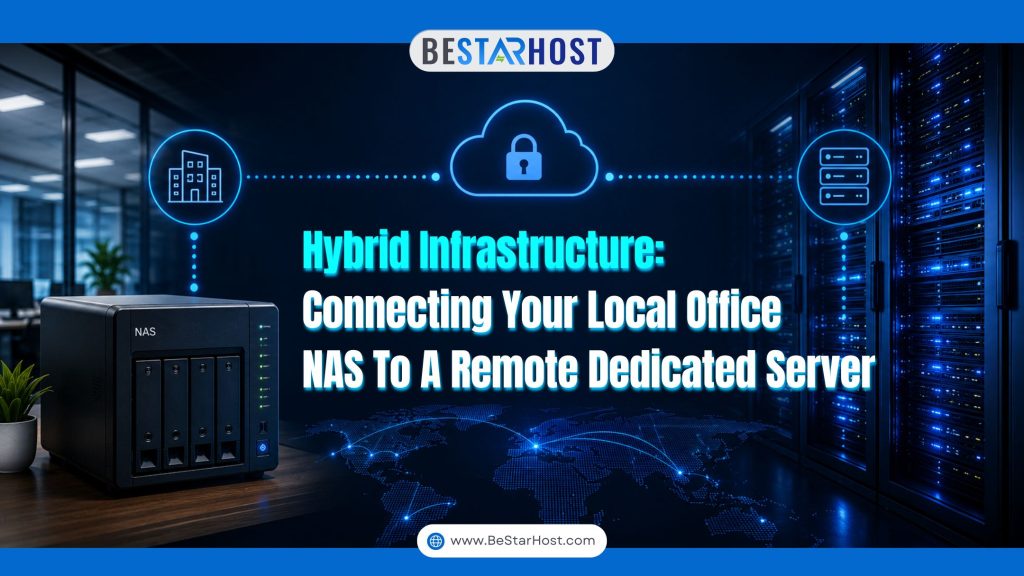
Modern businesses increasingly require infrastructure that combines the convenience of local storage with the scalability and processing power of remote servers. While cloud platforms provide flexibility, many organizations still prefer maintaining local storage systems for data control, speed, and compliance reasons.
This has led to the rise of the hybrid cloud dedicated server model, where businesses connect on-premise storage devices to high-performance remote infrastructure. Hybrid deployments provide a balance between local accessibility and enterprise-grade computing capabilities.
What Is Hybrid Infrastructure?
Hybrid infrastructure combines local IT resources with remote hosting environments to create a unified operational platform. Businesses can store frequently accessed files locally while using dedicated servers for backups, processing, analytics, and remote access.
As organizations modernize operations, hybrid IT infrastructure 2026 strategies are becoming increasingly popular due to their flexibility and cost efficiency.
Common Components of Hybrid Infrastructure
- Local NAS storage devices
- Remote dedicated servers
- Secure VPN connections
- Cloud backup systems
- Centralized management platforms
This architecture enables businesses to maintain operational flexibility while improving scalability.
Why Businesses Use Hybrid Cloud Dedicated Servers
Fully cloud-based infrastructure may not be suitable for every workload. Organizations often need fast local access to files while also requiring powerful remote compute resources.
A hybrid cloud dedicated server deployment allows businesses to combine local storage performance with remote scalability and redundancy.
Benefits of Hybrid Infrastructure
- Improved data accessibility
- Reduced latency for local users
- Enhanced disaster recovery capabilities
- Scalable remote processing
- Better cost management
These benefits make hybrid deployments attractive for mid-sized businesses.
Connecting Local Storage to a Remote Host
One of the most important aspects of hybrid infrastructure is securely linking local NAS devices to remote dedicated servers. This connection enables synchronization, backup, and remote processing.
Businesses focused on connecting local storage to remote host environments typically use encrypted network tunnels for secure communication.
Common Integration Methods
- Site-to-site VPN connections
- Encrypted file synchronization
- Remote mount protocols
- Hybrid backup software
- Distributed file systems
These technologies ensure secure and reliable connectivity between environments.
Site-to-Site VPN Server Setup
A secure VPN is essential for transmitting data between local offices and remote servers. Site-to-site VPNs create encrypted tunnels that allow private communication over public internet connections.
Implementing a reliable site-to-site VPN server setup ensures secure data transfer and protects sensitive information.
Advantages of Site-to-Site VPNs
- Encrypted communication channels
- Secure remote access
- Reduced exposure to cyber threats
- Centralized network management
- Reliable branch office connectivity
VPN connectivity is a foundational component of hybrid infrastructure design.
Remote Server Backup Integration
Data protection is one of the primary reasons businesses adopt hybrid environments. Storing backups on remote dedicated servers protects against hardware failures, ransomware, and local disasters.
Organizations implementing remote server backup integration strategies gain improved resilience and recovery capabilities.
Backup Integration Benefits
- Offsite disaster recovery
- Automated backup scheduling
- Versioned data recovery
- Reduced risk of data loss
- Centralized backup management
Remote backups ensure business continuity during unexpected events.
Hybrid IT Infrastructure in 2026
Businesses are increasingly adopting flexible infrastructure strategies that combine local and remote resources. As data volumes grow and remote work expands, hybrid deployments provide the scalability needed for modern operations.
Industry analysts expect hybrid IT infrastructure 2026 adoption to continue rising as organizations seek balanced infrastructure solutions.
Key Trends Driving Adoption
- Growth of remote work environments
- Increasing cybersecurity requirements
- Demand for scalable processing power
- Need for disaster recovery solutions
- Cost optimization initiatives
Hybrid infrastructure offers a practical approach to addressing these evolving requirements.
Use Cases for Hybrid Infrastructure
- Media production workflows
- Engineering and CAD environments
- Healthcare data management
- Business analytics platforms
- Remote office collaboration systems
These workloads benefit from combining local storage speed with remote processing scalability.
Best Practices for Hybrid Deployments
Use Redundant Connectivity
Maintain multiple internet connections to ensure reliable VPN availability.
Automate Backup Processes
Automated synchronization reduces operational complexity and improves consistency.
Monitor Infrastructure Performance
Continuous monitoring helps identify network bottlenecks and storage issues.
Secure Data Transfers
Encrypt all communications between local and remote systems.
Conclusion
Hybrid infrastructure provides businesses with a flexible approach to modern IT operations. By combining local storage systems with remote servers, organizations gain improved scalability, disaster recovery, and operational efficiency.
A properly designed hybrid cloud dedicated server environment enables secure connecting local storage to remote host operations while supporting long-term scalability. Through reliable site-to-site VPN server setup and effective remote server backup integration, businesses can build resilient and future-ready hybrid IT infrastructure 2026 strategies.